Understanding Property Taxes and Assessed Value in France: Your 2026 Guide to Taxe Foncière
Reading time: 9 minutes
Table of Contents
- The Basics: What You’re Actually Paying For
- How Assessed Value (Valeur Locative Cadastrale) Really Works
- What’s New in 2026
- City-by-City Comparison
- Common Challenges (and How to Solve Them)
- FAQs
- Your Roadmap Forward
The Basics: What You’re Actually Paying For
Ever opened your French property tax bill and wondered how anyone arrived at that number? You’re not alone. Every autumn, millions of property owners across France stare at their taxe foncière notice, trying to decode a system that seems designed by bureaucrats for other bureaucrats.
Here’s the straight talk: French property taxation isn’t random. It’s built on a single foundational concept—the valeur locative cadastrale (cadastral rental value)—and once you understand that piece, the rest of the puzzle falls into place surprisingly fast.
In France, there are two main property-related taxes owners need to know about in 2026:
- Taxe foncière — an annual tax paid by all property owners, whether they live in the property or rent it out
- Taxe d’habitation sur les résidences secondaires — still applicable for second homes, though abolished for most primary residences since 2023
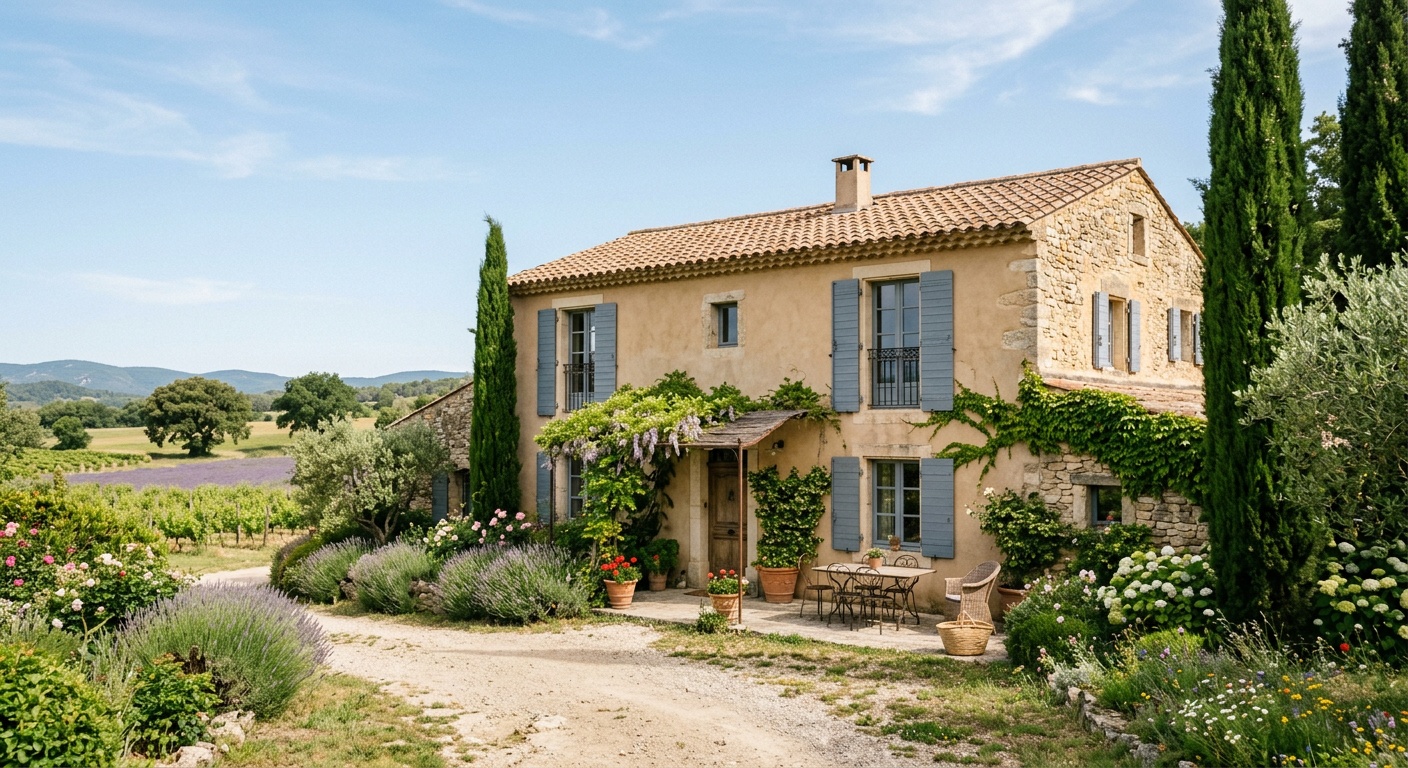
Quick Scenario: Imagine you just inherited a stone farmhouse in the Dordogne. The previous owner paid €890 annually in taxe foncière. Should you expect the same bill? Not necessarily—and understanding why is where this guide becomes genuinely useful.
How Assessed Value (Valeur Locative Cadastrale) Really Works
The valeur locative cadastrale is essentially a theoretical annual rental value that the French tax administration assigns to your property, as if it were rented out under normal market conditions. This figure—not your purchase price, not current market value—forms the base for calculating your tax.
According to the Direction Générale des Finances Publiques (DGFiP), this value is calculated using criteria established decades ago, including:
- Surface area and number of rooms
- Property category (from luxury to very modest)
- Location and “comfort” elements (garage, garden, swimming pool)
- Condition and general upkeep
Here’s the catch that trips up many owners: these base values date back to 1970 for residential properties. They’re updated annually through indexation, but the underlying methodology hasn’t been overhauled in over five decades. A comprehensive revaluation—long promised—has been repeatedly postponed, with the latest target now pushed toward 2028 for residential properties (commercial premises were revalued back in 2017).
The Calculation Formula, Simplified
Once your property’s valeur locative cadastrale is set, local authorities apply this formula:
Taxable base = Valeur locative cadastrale × 50% (for taxe foncière)
Then: Tax owed = Taxable base × local tax rate (set by commune, department, and intercommunality)
That 50% abatement exists to account for maintenance and management costs—a detail many owners don’t realize is already baked into their bill.
Why Two Similar Houses Can Have Wildly Different Bills
This is where things get interesting. Two nearly identical houses—same square footage, same neighborhood—can have taxe foncière bills that differ by 30% or more. Why? Because the cadastral value was often assessed at different times, using slightly different comparison properties, and local tax rates vary enormously between communes. A house in Saint-Tropez faces different multipliers than one in a rural commune in the Creuse, even before considering the underlying valeur locative.
What’s New in 2026
For the 2026 tax year, the government applied a national indexation coefficient of +1.7% to cadastral rental values, reflecting INSEE’s consumer price index trends from the previous twelve months. This is lower than the sharp increases seen in 2023 (+7.1%) and 2024 (+3.9%), offering some relief to owners after several years of steep hikes.
However, indexation is only half the story. Many municipalities, facing budget pressures after reduced state transfers, have voted to raise their local rates independently. Cities like Marseille, Nice, and several Paris suburbs approved rate increases between 2% and 8% for 2026, meaning the actual bill increase for many households will exceed the national indexation figure.
As one property tax consultant in Bordeaux put it: “Owners often blame the state for rising bills, but in most cases, it’s the local council’s rate decision—not the national indexation—that explains the real jump on their notice.”
City-by-City Comparison
To illustrate how dramatically location affects your bill, here’s a comparison of average taxe foncière for a standard 70m² apartment across several French cities in 2026:
| City | Avg. Annual Tax (70m²) | Local Rate Change 2026 | Notable Factor |
|---|---|---|---|
| Paris | €1,120 | +0% | High cadastral value, stable rate since 2024 |
| Marseille | €960 | +6.5% | Municipal budget deficit driving hikes |
| Lyon | €890 | +2.1% | Moderate growth, strong local services |
| Nantes | €780 | +1.7% | Rate frozen, only national indexation applied |
| Rural Dordogne | €540 | +1.7% | Lower cadastral values, smaller commune budgets |
Below is a simplified visualization comparing the local rate increases applied in 2026 across these areas:
Common Challenges (and How to Solve Them)
Challenge 1: Disputing an Inflated Cadastral Value
Case in point: a couple in Toulouse discovered their three-bedroom house was classified in a higher comfort category than comparable homes on their street, inflating their bill by roughly €340 per year. After filing a formal claim (réclamation) with their local tax office, backed by photos and comparisons with neighboring properties, they secured a retroactive correction covering three years.
Actionable tip: You can request your property’s detailed cadastral file (fiche d’évaluation) from your local tax center. Compare it against similar properties nearby—discrepancies are more common than you’d think, especially for properties renovated without updated declarations.
Challenge 2: Forgetting to Declare Renovations
Adding a conservatory, converting an attic, or building a pool can all trigger a legal obligation to file a “déclaration modèle H1” within 90 days of completion. Skip this, and you risk a penalty—plus a potentially inaccurate assessment down the line. Since 2023, France has intensified satellite and aerial imagery checks (the “foncier innovant” program), specifically targeting undeclared pools and extensions.
Challenge 3: Exemptions People Don’t Know They Qualify For
Many owners over 75 with modest income, or those receiving certain disability allowances, remain fully exempt from taxe foncière—yet fail to apply. Others qualify for partial exemptions on new constructions (typically two years) or energy-efficient renovations in specific communes.
Pro Tip: Exemptions aren’t automatic in every case—especially the two-year new-build exemption, which some communes have voted to cancel. Always confirm with your local mairie rather than assuming the default rule applies.
Frequently Asked Questions
Is taxe d’habitation completely gone in France?
Not entirely. It was abolished for primary residences starting in 2023, but it still applies in full to second homes and vacant properties in certain zones, often with a surcharge of up to 60% in high-demand areas like coastal towns and major cities.
Can I estimate my taxe foncière before buying a property?
Yes. Ask the seller or notaire for the most recent tax notice—it’s public information tied to the property, not the person. You can also request an estimate directly from the local tax office (centre des finances publiques), though final figures depend on that year’s local rate decisions.
Will the long-awaited cadastral revaluation increase my taxes significantly?
Possibly, but not uniformly. The 2028 residential revaluation (already delayed multiple times) is expected to rebalance values based on actual current rental markets rather than 1970s estimates. Properties in gentrified neighborhoods may see increases, while some overvalued rural properties could actually see reductions.
Your Roadmap Forward
Property taxation in France sits at an interesting crossroads: an aging valuation system colliding with modern fiscal pressures on local governments. As municipalities lean more heavily on taxe foncière to offset reduced state funding, understanding your assessment isn’t optional anymore—it’s essential financial literacy for any property owner.
Here’s your practical checklist for 2026:
- Review your notice line by line — compare the cadastral value and local rate against last year’s bill to isolate what actually changed
- Request your fiche d’évaluation if your bill seems disproportionate to comparable properties nearby
- Check exemption eligibility annually, especially after life changes like retirement or disability status
- Declare any renovations promptly to avoid penalties from increasingly sophisticated detection tools
- Watch your commune’s budget votes each spring—local rate decisions, not national indexation, usually explain the biggest jumps
Whether you’re a first-time buyer in Nantes or a long-time owner of that Dordogne farmhouse, the same principle applies: the system rewards those who ask questions rather than those who simply pay and move on. So, what’s the first thing you’ll check on your next tax notice?